

A common question asked by organizations during security planning is whether to rely on physical security officers, a closed-circuit television (CCTV) surveillance system, or an integrated combination of both. The answer depends heavily on the operational environment, threat profile, and liability considerations of your facility.
The Evolution of Surveillance Technology
Washington, DC, Northern Virginia, and suburban Maryland represent some of the most heavily monitored metropolitan areas in the nation. Emerging developments in high-definition IP camera technology, cloud recording, and intelligent analytics make CCTV coverage more accessible and cost-effective than ever before.
Modern camera systems equipped with AI can detect motion, trigger localized alarms, alert remote central stations, illuminate floodlights, or broadcast pre-recorded warnings. Furthermore, cameras provide invaluable recorded video evidence that law enforcement and insurance investigators rely upon after an incident has occurred.
Key Limitation: Recording vs. Real-Time Intervention
Security is fundamentally about preventing loss and intervening during active threats. While video recording meticulously documents a crime in progress, a camera alone cannot physically intervene, de-escalate a confrontation, or protect employees and visitors from immediate physical harm.
The Indispensable Value of Onsite Security Officers
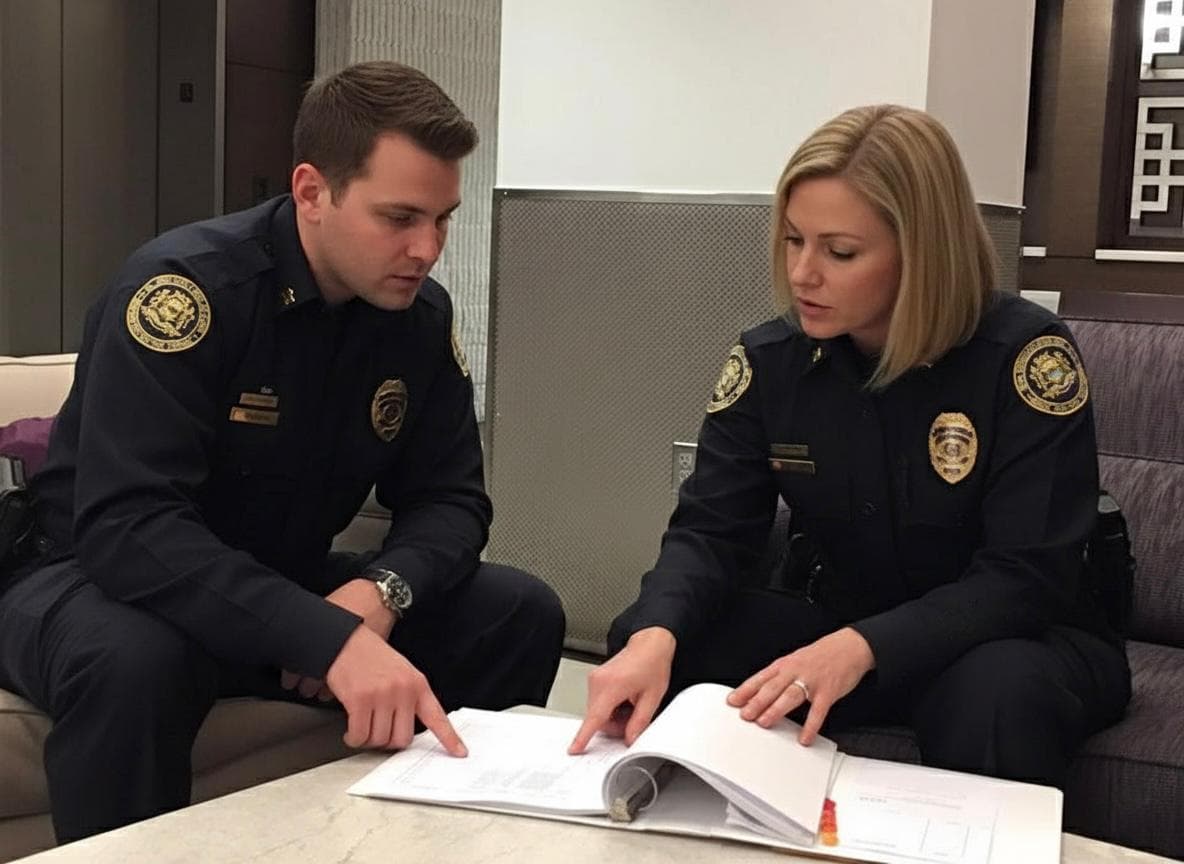
Unlike electronic systems, trained security officers possess situational intuition, human judgment, and the immediate capability to respond:
- Active Physical Deterrence: A uniformed, professional officer serves as an unmistakable physical deterrent that dissuades unauthorized entry and opportunistic crime before it occurs.
- Real-Time De-escalation: Human presence allows for verbal de-escalation, conflict resolution, and immediate tenant or guest assistance.
- Enforcement of Property Rules: Officers can enforce access control, verify credentials, escort trespassers off-site, and coordinate directly with first responders.
- Liability Reduction: Onsite officers actively identify maintenance hazards (such as wet floors or lighting outages) to prevent costly slip-and-fall claims.
Synthesizing Both: The Layered Security Model
The most resilient corporate headquarters, financial institutions, hospitals, and critical infrastructure facilities do not choose between guards and cameras—they deploy them in tandem. Cameras serve as force multipliers that extend an officer’s range of vision, while the officer provides the immediate intelligence, response, and authoritative presence required to maintain complete peace of mind.